

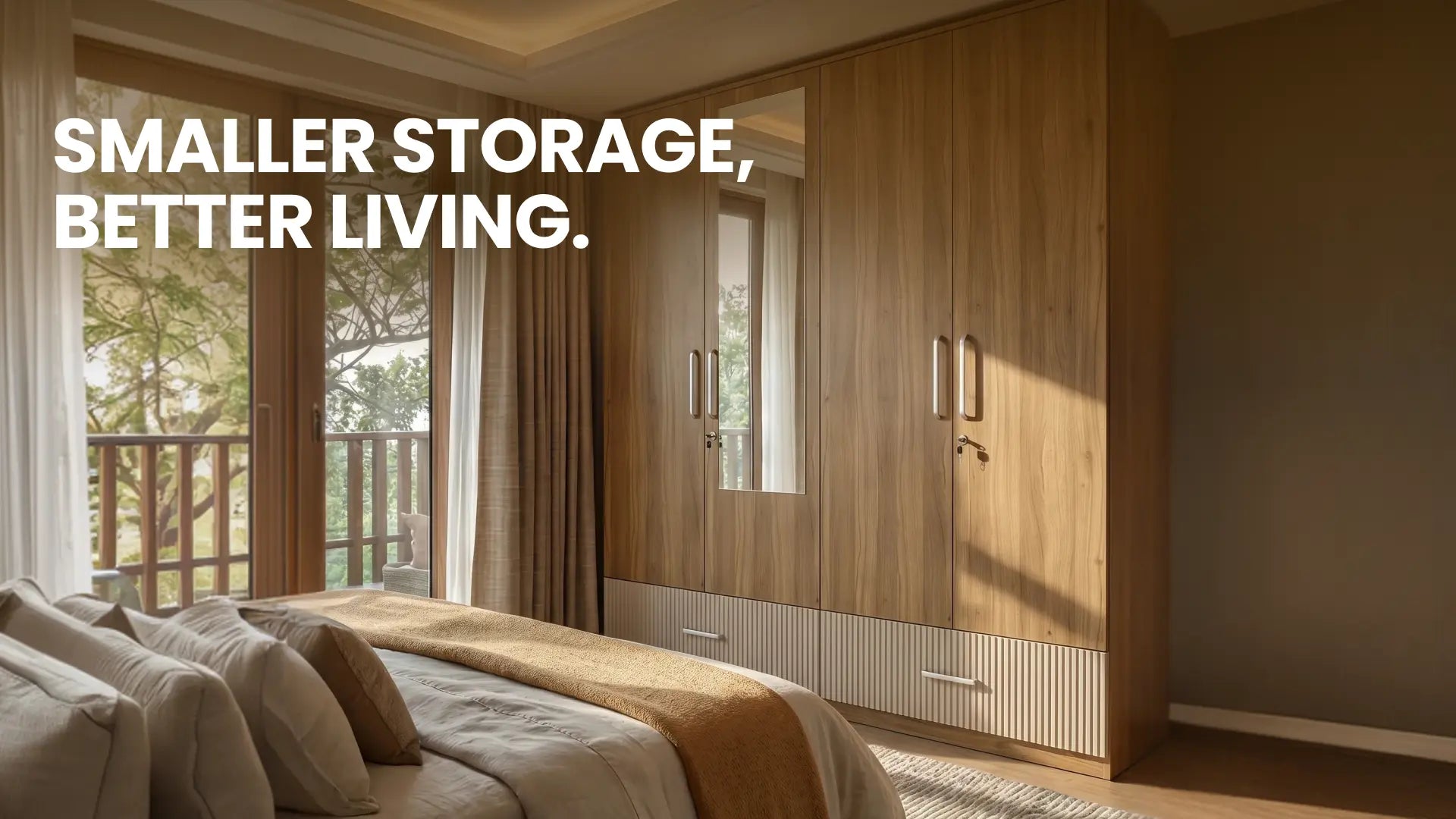
Small bedrooms make you notice what works, very quickly. It’s in everyday moments reaching for something, moving around, or just trying to keep things in place. And more often than not, the wardrobe is where it all comes together… or starts to feel difficult. That’s exactly why wardrobe ideas for small bedroom layouts deserve more thought than just choosing a design that looks good in a catalog.
What Makes a Wardrobe Work in a Small Bedroom
In compact rooms, a wardrobe becomes part of your daily rhythm. You don’t really think about it at first, but over time, you start noticing how it affects small things, how easily you can reach for something, whether the space feels open or slightly tight, whether everything has a place or just gets put somewhere.
What works here isn’t just size, but how the wardrobe feels in the room. Good wardrobe and bedroom design creates harmony between storage and movement, especially in compact spaces. Clean lines, balanced proportions, and a design that doesn’t feel heavy. It should sit naturally in the space, without making movement feel restricted or drawing attention every time you walk in. You’ll notice this more with wardrobes that are designed around everyday use where mirrors, drawers, or even the way sections are placed feel intuitive rather than added on.
These kinds of layouts often overlap with space saving wardrobe ideas, where functionality is built into the design rather than treated as an afterthought.
Wardrobe Types That Work Well in Small Bedrooms
When less really is enough

A 2-door wardrobe works when your storage needs are simple or well-managed. It fits into tighter layouts and leaves enough breathing room. This is where something like the Utsav or Prime 2-door wardrobes start to make sense: clean, compact, with just enough additions like a mirror or a lower drawer to handle everyday use without needing anything extra.
In terms of size, wardrobes in this category are typically around 6 feet in height, 2.6 feet in width, and 1.5 feet in depth. These proportions fit comfortably into smaller rooms without crowding the space. In most bedrooms, this is the kind of wardrobe that sits within a single wall section without taking over, usually a clear sign of a 2-door setup.
For anyone exploring wardrobe ideas for small bedroom spaces, this size often becomes the most practical starting point.
When you need a little more

When you need a little more storage, a 3-door wardrobe sits right in that in-between space. It gives you enough room to organise daily essentials without feeling excessive. Designs like the Antwerp three-door wardrobe in a natural wood finish, or even the Utsav and Prime 3-door variants, strike that balance well. With a mix of hanging space, drawers, and sometimes even an internal locker, everything feels more structured instead of cramped.
A typical 3-door wardrobe measures around 6.7 feet in height, 4.4 feet in width, and 1.75 feet in depth. It takes up a noticeable portion of the wall but doesn’t stretch edge-to-edge. That in-between scale is what makes it a comfortable fit for most mid-sized bedrooms.
This is also where organization ideas for small spaces become important because more storage only works when it’s structured properly.
When everything has to fit into one place

When everything needs to fit into one place, a 4-door wardrobe becomes the practical choice but only if your room can accommodate it. In smaller bedrooms, it can feel bulky unless the design is visually lighter and well-organised inside. Options like the Diago 4-door wardrobe, with clearly defined sections, drawers, and a separate locker, make it easier to manage storage without constant rearranging. At the same time, simpler designs like the Utsav or Prime 4-door wardrobes feel less heavy visually while still offering ample space.
A 4-door wardrobe typically measures around 6 feet in height, 6.2 feet in width, and 1.5 feet in depth. It usually spans almost an entire wall, which is often how you can identify a 4-door setup. While it offers maximum storage, it works best in rooms where space allows it to breathe. If chosen well, this can still work within space saving furniture ideas, especially when the rest of the room remains visually open.
The quiet impact of mirrors
Mirrors don’t just serve a purpose, they change how the room feels. In smaller bedrooms, they reflect light and make the space feel more open. Wardrobes with built-in mirrors, like the Utsav range or even mirror-finished variants in collections like Antwerp, often remove the need for an extra piece altogether, keeping the room simpler. That’s where space saving dressing table ideas naturally come in. A mirrored wardrobe can quietly replace a separate dressing setup, helping the room stay functional without adding more furniture.
Planning the Right Wardrobe Placement
Considering Width, Depth, and Door Clearance
Measuring the wall is one thing, but what matters is how the wardrobe actually works once it’s placed in the room. Width, depth, and door clearance can completely change how usable the space feels. A common mistake people make is measuring the wall exactly and choosing a wardrobe of the same size. For example, if your wall is around 8 feet, going for a wardrobe that’s exactly 8 feet wide can leave no room for movement or door clearance. What usually works better is thinking in terms of comfort, not exact fit. A slightly smaller width often makes the space easier to use.
You also need to think about how the doors will open. Since wardrobes like Utsav, Prime, Antwerp, or Diago come with hinged doors, they need enough space in front to open fully. If that space isn’t planned properly, even using the wardrobe can start to feel restrictive. Thoughtful placement is one of the most effective organization ideas for small spaces, because usability matters as much as storage. It’s often something you only realise later when opening a door starts to feel like an adjustment, or moving around feels slightly restricted. These are small things you don’t think about initially, but end up noticing every single day.
Keeping Movement and Accessibility in Mind

Before finalising a wardrobe, it helps to ask a simple question: do you actually have enough space to open it comfortably? It’s not just about fitting the wardrobe into the room, but about being able to use it without adjusting every time. If opening the doors feels restricted, or you have to move around furniture just to access it, the wardrobe stops feeling convenient very quickly.
A wardrobe should allow you to move comfortably, open doors fully, reach what you need, and step back without adjusting every time. When this works well, the room feels effortless to live in the kind of ease you don’t notice immediately, but would definitely miss if it wasn’t there. That practical thinking is at the heart of wardrobe ideas for small bedroom planning because convenience matters just as much as design.
Choosing the Right Wardrobe Finish and Colour for Your Space
Light vs dark finishes for smaller rooms

A modern wall wardrobe design also helps the wardrobe feel integrated into the room rather than visually separate. Lighter finishes tend to make a room feel more open and less crowded; they reflect light and help the space feel a little more breathable.
Natural wood tones like the ones seen in ranges such as Antwerp or Diago can also bring warmth without making the space feel too heavy when balanced well. Darker finishes, on the other hand, can make a room feel more enclosed if the space is already compact, which is why they usually work better when there’s enough light or space to balance them out.
Gloss vs matte: what actually works daily

When choosing between gloss and matte, most people don’t just think about how it looks, they think about how it will hold up over time. For instance, a gloss finish can reflect light and make the room feel brighter, especially in smaller spaces. But at the same time, you’ll notice fingerprints, scratches, and marks more easily on it. Matte finishes are usually easier to maintain and don’t show wear as quickly, something you’ll notice with wardrobes like Utsav or Prime, which are designed to sit quietly in the background over time. It’s a small decision, but one you end up noticing every day once you start using the wardrobe.
Storage Layout: What Fits Your Lifestyle
It’s not about more space, it’s about the right space
It also depends on how the inside is organised. When there are fewer compartments, things tend to get stacked into one space and over time, you end up just putting things in rather than organising them. You’ll notice this when you open the wardrobe and everything feels full, but you still can’t find what you’re looking for. That’s where having separate sections, drawers, and compartments makes a real difference not in how much you store, but in how easily you can access it.
The value of space you don’t use every day

Top storage helps keep seasonal or rarely used items out of the way. It’s not accessed daily, but it makes the rest of the wardrobe feel lighter and more organised especially in designs that already offer layered storage inside. At the same time, in smaller bedrooms, not everything has to fit inside the wardrobe itself. Sometimes, the smarter approach is to balance storage across the room. For example, something like the Nova King or Queen Bed with Hydraulic Storage can quietly solve a lot of what the wardrobe can’t. It gives you space to store things you don’t reach for often like occasion wear, extra bedding, or off-season clothes without crowding your wardrobe.
The difference is in the effort. With a regular bed, accessing storage often turns into a task: you have to adjust the mattress, manage the bedsheet, and then put everything back again. Over time, that friction adds up, and you end up avoiding the space altogether. A hydraulic bed changes that. It’s a low-effort lift, easy to access, and something you’ll actually use when you need it. In a way, it takes the pressure off your wardrobe. You don’t have to make everything fit into one place, you just have to make sure everything has a place.
Common Mistakes When Buying a Wardrobe for a Small Bedroom
Many wardrobe ideas for small bedroom setups fail not because of design, but because usability is overlooked. Most mistakes don’t feel like mistakes at first. They only show up once you start living with the wardrobe. Like realising the doors don’t open fully because the bed is just a little too close. Or having to step aside every time you reach for something, turning a simple action into a small adjustment, every single day. This becomes even more noticeable in wardrobes with outward-opening doors, where door clearance directly affects how easy the space feels to use. Another thing people often don’t think about is how the wardrobe opens in relation to the space above it. For example, if there’s a loft or overhead storage, you don’t want the wardrobe doors hitting it every time you open them.
Sometimes it’s choosing a wardrobe that looks right in the store, but feels too heavy once it’s in your room. Or thinking more storage will solve everything, only to find yourself still struggling to organise what you actually use daily especially when everything ends up in one section instead of being properly divided. In smaller bedrooms, these aren’t big mistakes, but they’re constant ones. The kind you notice in small moments, again and again.
Conclusion
The right wardrobe doesn’t just hold your things, it shapes how your room feels. In a small bedroom, the goal isn’t to fit more, but to fit better. Something that works with your space, your habits, and your everyday life without demanding attention. And once that balance is right, the room starts to feel easier. That’s the real value behind thoughtful wardrobe ideas for small bedroom choices design that quietly improves the way you live.


