

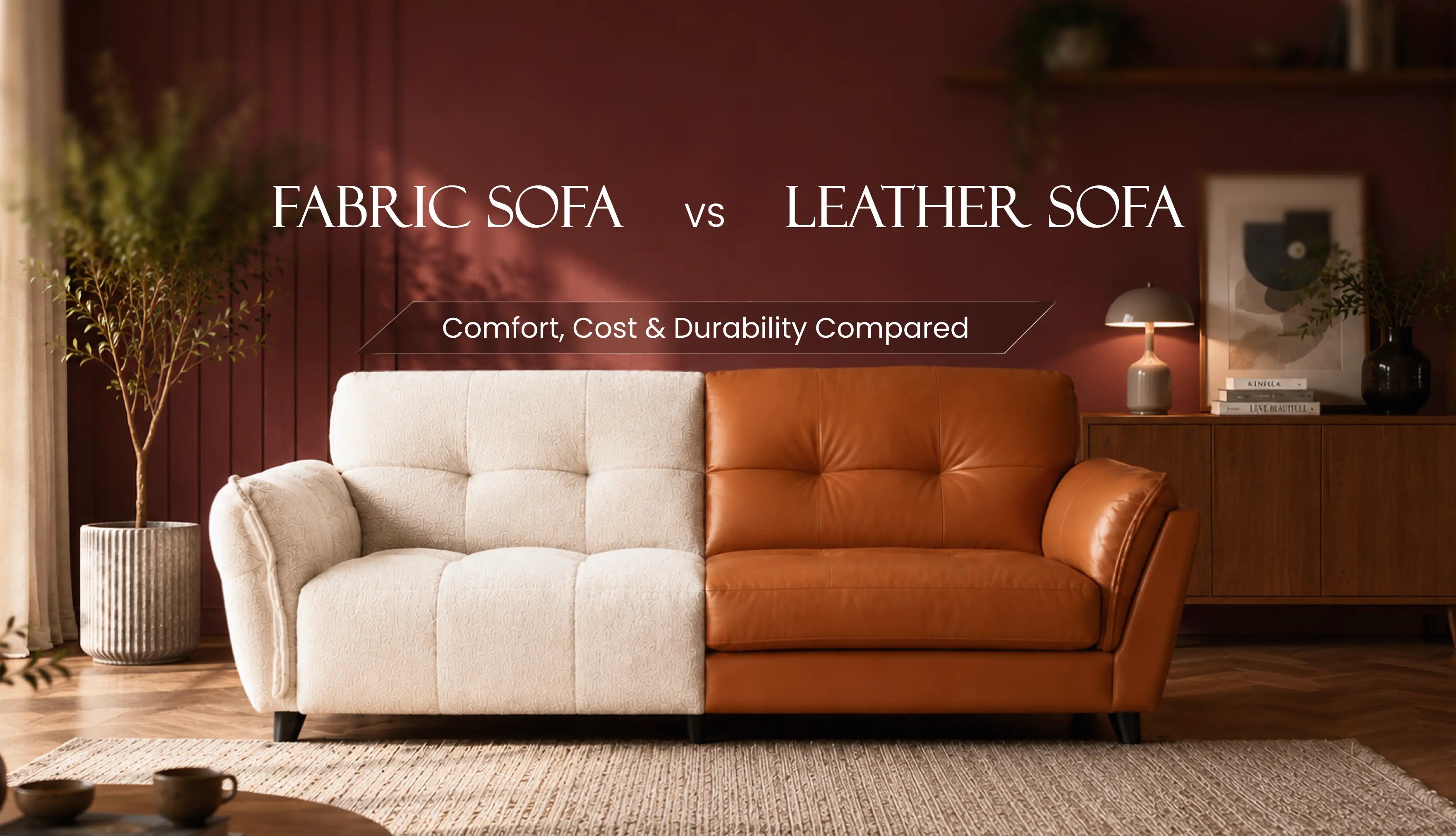
Fabric sofas are softer, more breathable, and generally more comfortable in homes without constant air conditioning. Leatherette (PU) sofas are easier to wipe clean and can work well for homes with children or pets. Genuine leather offers a different feel and can last well with proper care, but usually comes at a higher price. For most Indian homes, fabric and leatherette are the more practical choices.
Comparison Table - Leather vs Fabric Sofa
| Factor | Fabric Sofa | Leatherette (PU) Sofa | Genuine Leather Sofa |
|---|---|---|---|
| Comfort | Soft, comfortable and breathable | Smooth feel, but can feel warmer in hot weather | Softens with use and develops a natural feel |
| Best Climate Fit (India) | Works well in most Indian homes, especially non-AC spaces | Better suited to air-conditioned rooms and homes where easy cleaning matters | Best when the room is well ventilated or air-conditioned |
| Durability | Depends on fabric quality and construction; good-quality fabric can last for years | Can handle everyday use, but the surface may wear or peel over time | Highly durable when properly cared for |
| Maintenance | Needs regular vacuuming and occasional deeper cleaning | Easy to wipe with a soft, damp cloth | Needs regular cleaning and conditioning |
| Stain/Spill Resistance | Spills can soak in if not cleaned quickly | Spills usually sit on the surface, making them easier to wipe | Relatively easy to wipe clean when treated properly |
| Pet/Kids Friendliness | Comfortable, but stains and pet hair can be harder to deal with | Easy to wipe, making it convenient for busy households | Easy to wipe but can still be scratched by pets |
| Cost (India) | Usually available across a wide range of prices | Generally more affordable than genuine leather | Usually the most expensive option |
| Colour/Pattern Variety | Large variety of colours, textures and patterns | Mostly available in solid colours and leather-like finishes | Usually available in classic, solid shades |
What Is a Leather Sofa? (Genuine vs PU vs Leatherette - Know the Difference)
The word "leather" on a sofa can be a little confusing. Not every sofa sold as a leather sofa is made entirely from genuine leather. There are three terms worth knowing before you buy: genuine leather, PU leather and leatherette.
Genuine leather is made from animal hide. It has a natural texture and usually becomes softer with use. Good-quality leather can last for many years when it is cleaned and cared for properly. It also tends to cost more than fabric or synthetic alternatives.
PU leather, short for polyurethane leather, is a synthetic material made to look and feel like leather. Leatherette is another commonly used term for synthetic leather. These options are popular because they give you the appearance of leather without the price of genuine hide.
What Is a Fabric Sofa?
A fabric sofa is exactly what it sounds like, woven or knitted material stretched over the cushioning and frame. But "fabric" covers a lot of ground. Polyester, chenille, velvet, dozens of other upholstery types, so two fabric sofas can end up feeling nothing alike side by side. Most people reach for fabric because of the softer feel and the sheer number of colours and textures on the table. Beige blends into a neutral room without trying. Deep blue or olive adds colour without touching a single wall. HomeTown's current fabric lineup spans a wide range of colours, sizes, and upholstery types.
It's also the better pick if the sofa is where you actually live on weekends. Pizza, a film, not moving until the credits roll, that kind of Friday night, and a soft fabric sofa just feels more inviting for it.
Fabric Sofa vs Leather Sofa: Detailed Comparison
Durability and Lifespan
Both hold up for years, build quality matters here just as much as the upholstery choice itself. Good stitching and solid cushioning on a fabric sofa means it survives daily family use without much drama, and leatherette does well in households where spills are just a fact of life. Genuine leather plays a different game entirely, age it right and it looks better over time instead of worn out, while leatherette's surface can start showing its age with heavy use or careless care. Don't take the word "leather" at face value though, find out first whether it's the real thing or a synthetic stand-in.
Cleaning and Maintenance
Leatherette wins this one outright. Dal spills at dinner, wipe it off before it turns into a stain, done. Fabric asks for more patience, a spill left sitting soaks straight in. Regular vacuuming keeps fabric sofas in shape, especially around pets or kids, and bigger stains need whatever cleaning method the specific fabric recommends, not just whatever's under the kitchen sink. Genuine leather has its own small ritual too, regular dusting, the right leather products, nothing complicated.
Cost
Fabric sofas have the widest price range. At HomeTown, smaller fabric sofas can start around ₹20,000, while a two-seater like the Paddington is currently around ₹30,000. Leatherette options can start around ₹27,000 for a single-seater, while larger two-seater designs can go up to around ₹55,000. Genuine and half-leather designs usually sit higher. So, if you're working with a budget of ₹20,000–₹30,000, fabric gives you more options, while leatherette makes more sense when you're willing to spend a little extra for the leather-like finish and easier cleaning.
Aesthetic and Style Flexibility
Fabric wins on choice alone, colours, textures, finishes enough to match the curtains, the rug, that one loud cushion nobody's allowed to throw out. Leatherette leans more polished, tan, brown, black, grey, the kind of palette that suits a modern living room without trying too hard. Genuine leather does its own thing entirely, ages into something richer over time, and works best when the furniture doesn't need much decorating around it.
Allergies and Health Considerations
Neither material is the automatic safe pick for allergies, what actually counts is how easily dust and pet hair come off. Leatherette and real leather both wipe down easily thanks to smooth surfaces. Fabric holds onto dust and pet hair a bit more, so vacuuming becomes non-negotiable. If allergies are a genuine concern, look past the upholstery, cushions, filling, even the room itself all play a part.
Which Sofa Suits Your Indian Home? A Climate & Lifestyle Guide
India's weather barely stays consistent from one city to the next, and a sofa that feels perfect in an air-conditioned Delhi living room can feel completely different in a humid Mumbai apartment. Daily routine ends up mattering just as much as the climate itself.
Homes With Kids and Pets
Leatherette earns its keep in a house where the sofa takes a beating, juice spills, muddy paws, biscuit crumbs, all of it wipes off a smooth surface without much fuss. Fabric still works for anyone who wants the softer feel, just budget for more frequent cleaning, and if the dog's claimed the sofa as its own, pick a fabric that vacuums easily.
Homes Without Air Conditioning
Fabric is generally the more comfortable call here, less sticky against skin, more breathable than synthetic leather. That matters most in summer, especially once the sofa becomes the default TV spot after dinner. Leatherette can still work, its smooth surface just runs warmer once the room heats up.
Humid and Coastal Regions (Mumbai, Chennai, Kerala, Kolkata)
Humidity changes the math. Fabric tends to feel better in these conditions, particularly without regular AC, while leatherette can turn warm and sticky against the skin. Anyone who's stepped outside in Mumbai right after a monsoon downpour already knows that damp feeling, and good ventilation with regular cleaning matters here no matter which upholstery you land on.
Hot and Dry Regions (Delhi, Rajasthan, Gujarat)
Ventilation and air conditioning decide most of this. Fabric suits a naturally ventilated room just fine, leatherette suits an air-conditioned one where the easy-clean surface actually gets used. Direct sunlight for hours a day, check the manufacturer's placement and care advice before committing either way.
Hill and Cold Regions (Himachal, Northern Hill Stations)
Warmth beats breathability up here. Heavier or softer fabric sofas make a living room feel cosier once the temperature drops. Leather and leatherette manage fine too, especially with throws and cushions layered in, but fabric usually wins out for long, cold evenings spent indoors.
Shop Fabric & Leatherette Sofas at HomeTown
HomeTown stocks a wide spread of fabric and leatherette sofas across sizes, colours, and designs, so picking practically doesn't mean settling on looks. The current range includes fabric picks like the Manchester, Garcia, and Riga, leatherette options like the Genova and Calista, and half-leather designs for anyone after a middle ground.
Frequently Asked Questions
Which is better, leather sofa or fabric sofa?
Depends on use. Fabric suits hot weather, leatherette suits homes with kids or pets that need easy cleanup.
Which sofa lasts longer in Indian climate?
Genuine leather and good fabric both last years with proper care. Leatherette tends to wear faster depending on quality.
Is a leather sofa good for humid weather?
Leatherette runs warm and sticky in humidity without AC, fabric stays more comfortable against the skin.
How do I clean a fabric sofa at home?
Vacuum regularly, treat stains with the method recommended for that specific fabric.
Is HomeTown's "leather" sofa genuine leather or leatherette?
Depends on the product, some listed as "leather" are actually leatherette, so check the material specs first.
Which sofa is better for homes with pets and kids?
Leatherette usually wins for easy cleanup, though fabric works fine with a bit more regular maintenance.


